
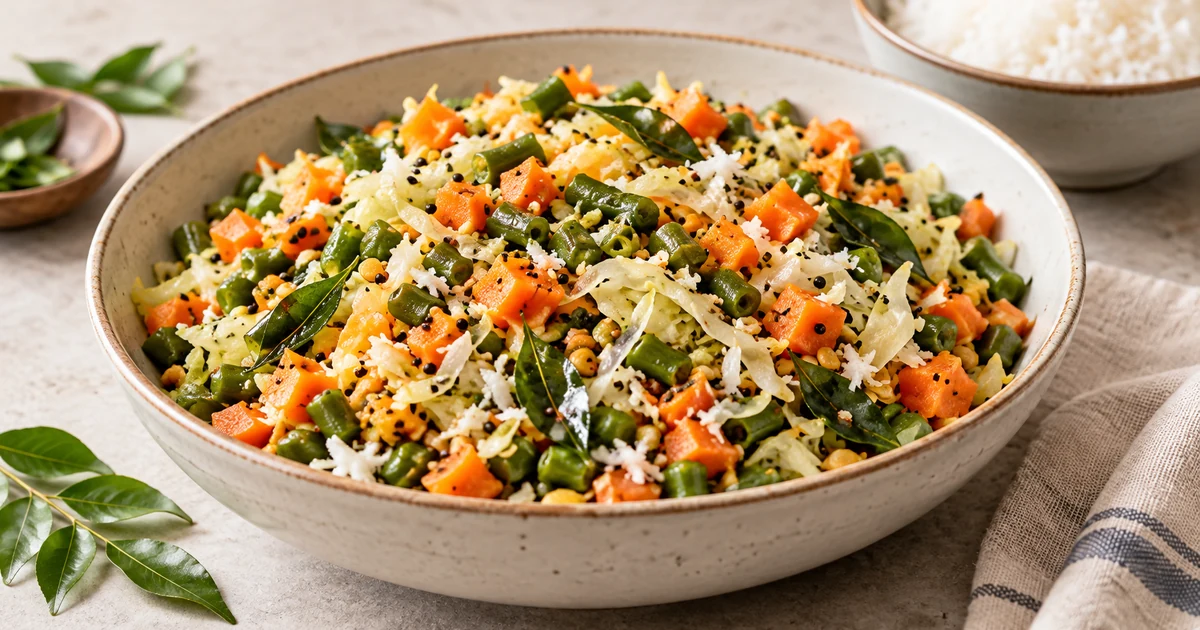
South Indian Vegetable Stir Fry That Makes Everyday Veggies Worth Getting Excited About
Got carrots, cabbage, and beans hanging around your fridge with absolutely no plans? Give them a hot pan, some curry leaves, and a little coconut. Suddenly, that vegetable drawer looks like dinner potential.
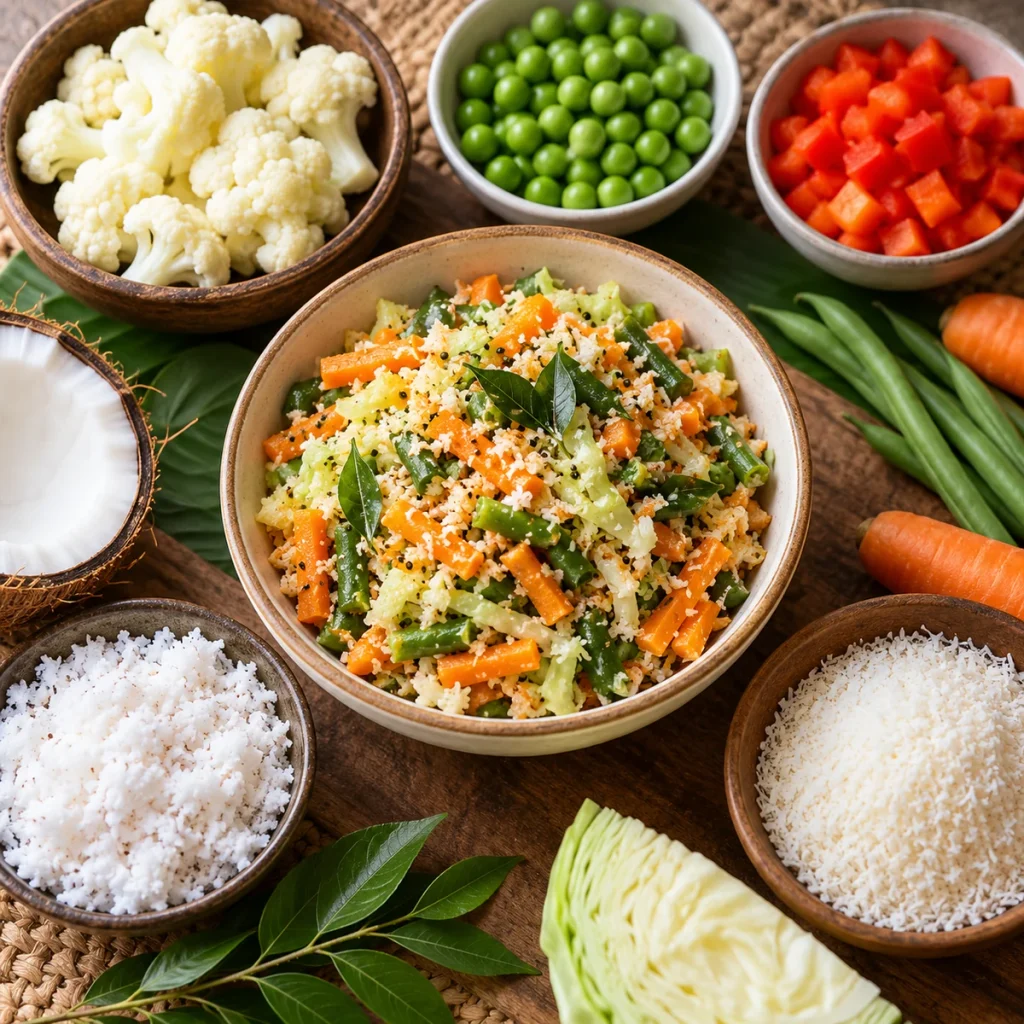
This South Indian vegetable stir fry takes inspiration from poriyal, a dry vegetable side dish with many regional and household variations. Mustard seeds bring a gentle pop, curry leaves add their distinctive aroma, and coconut ties everything together.
No heavy sauce. No complicated spice collection. Just colorful vegetables that actually deserve space beside your rice.
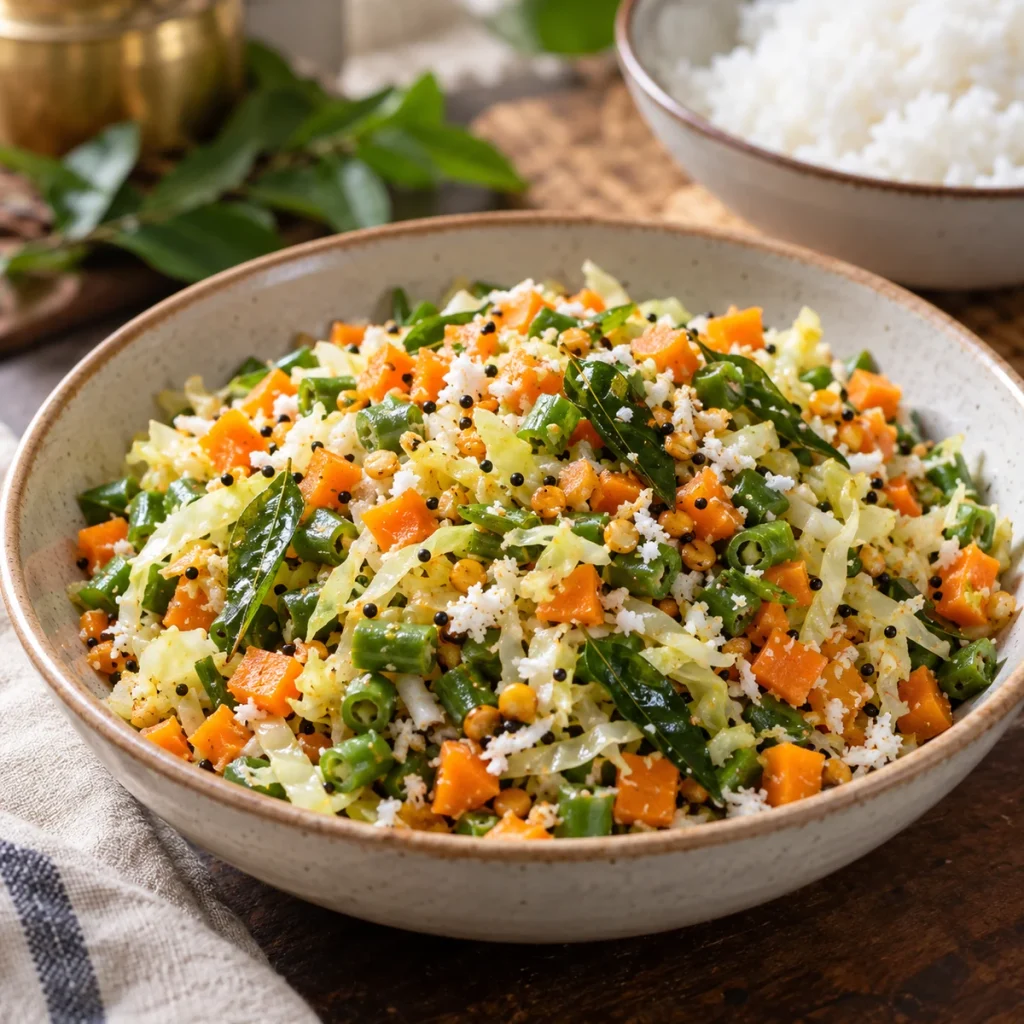
Why This Recipe Is Awesome
Some vegetable sides feel like a chore you finish before reaching for the good stuff. This one brings enough flavor to compete for your attention.
Here’s what makes it a keeper:
- It takes about 25 minutes. Chop first, then let the pan handle the rest.
- It uses everyday vegetables. Nothing requires a special expedition through three grocery stores.
- It keeps things flexible. Swap vegetables according to whatever your fridge offers.
- It delivers texture. Tender vegetables, toasted lentils, and coconut keep every bite interesting.
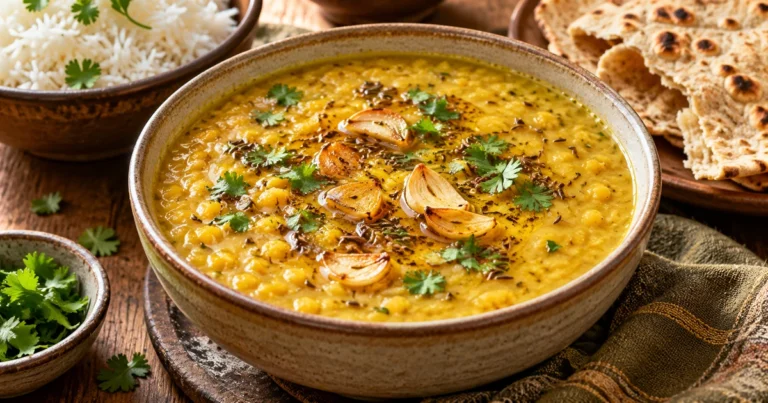
- It pairs easily. Serve it with rice and dal, sambar, rasam, or chapati.
Planning a dinner with a few vegetable sides? Browse these 21 easy fall side dishes for more ideas to round out your table.
This recipe makes 4 side servings, with roughly 10 minutes of prep and 15 minutes of cooking.
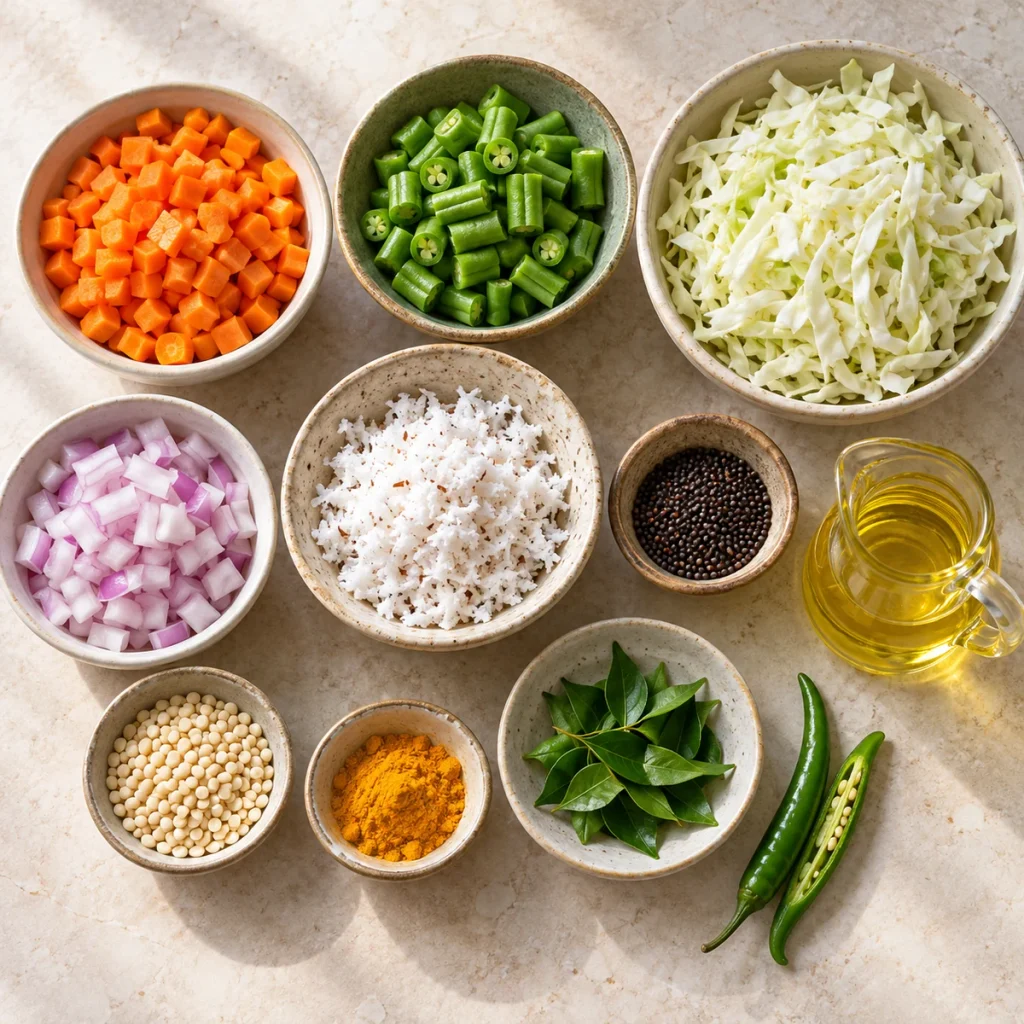
Ingredients You’ll Need
For the vegetables
- 1 cup carrots, cut into small, even dice
- 1 cup green beans, trimmed and sliced into ¼-inch pieces
- 2 cups cabbage, finely shredded
- 1 small onion, finely chopped
- ¼ teaspoon ground turmeric
- ½ teaspoon salt, plus more to taste
- 2–4 tablespoons water, as needed
- ⅓ cup grated fresh or thawed frozen coconut
For the tempering
- 1½ tablespoons coconut oil or a neutral cooking oil
- ½ teaspoon black mustard seeds
- 1 teaspoon split, skinned urad dal, optional, for a nutty crunch
- 8–10 fresh curry leaves, washed and thoroughly dried
- 1 green chili, slit lengthwise; remove the seeds for gentler heat
To finish
- 1–2 teaspoons lemon juice, optional
Prep everything before you heat the oil. Mustard seeds won’t politely wait while you hunt for the cabbage.
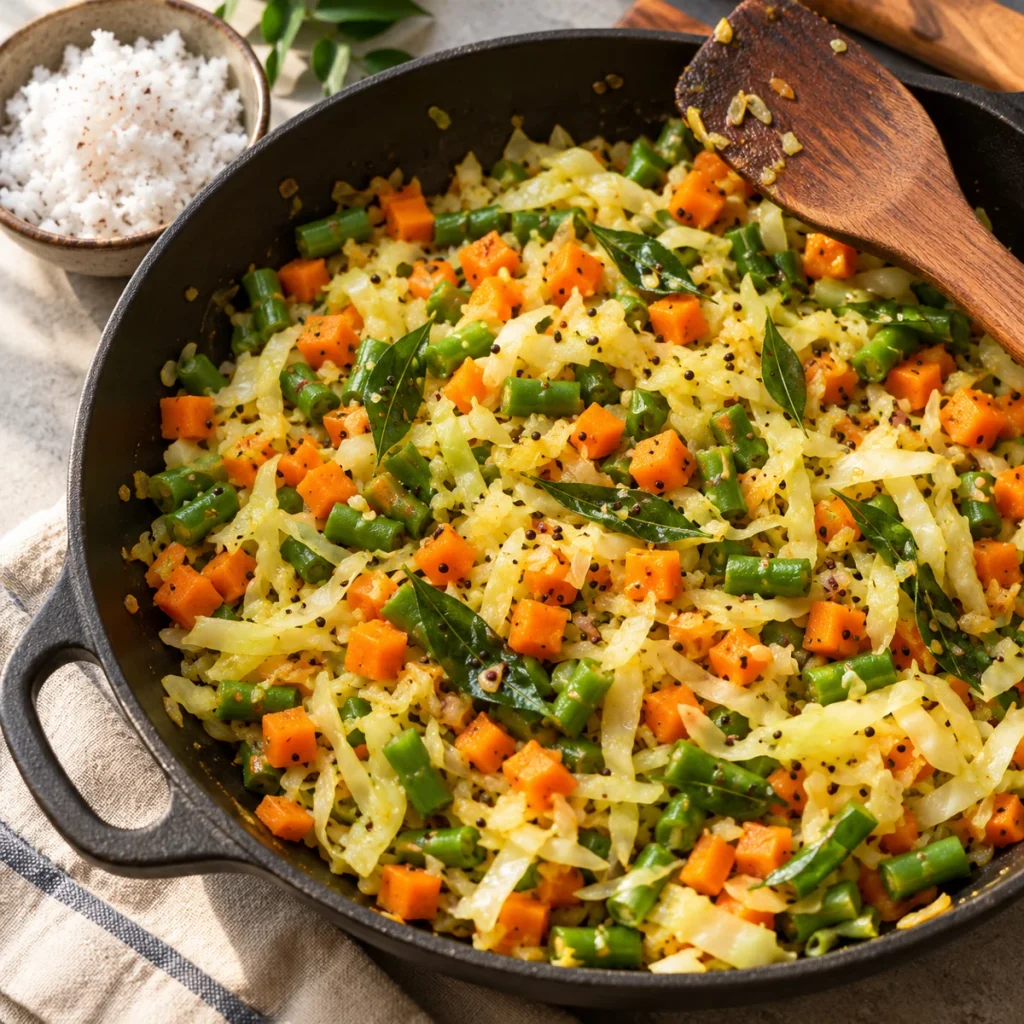
Step-by-Step Instructions For South Indian Vegetable Stir Fry
- Chop the vegetables evenly.
Keep the carrots small and slice the beans thinly so they cook at a similar pace. Shred the cabbage and keep it separate; it needs less cooking time. - Start the tempering.
Heat the oil in a large skillet over medium heat. Add the mustard seeds and let them begin popping, keeping a lid nearby to catch enthusiastic escapees. - Toast the urad dal.
Add the optional urad dal and stir for 30–60 seconds, until it turns light golden. Add the dry curry leaves and slit chili carefully; they may splutter. - Soften the onion.
Add the onion and cook for about 2–3 minutes, stirring regularly. Aim for softened onion rather than deep browning. - Cook the firmer vegetables.
Add the carrots, beans, turmeric, salt, and 2 tablespoons water. Stir, cover, and cook over medium-low heat for 5–7 minutes, checking halfway through. - Add the cabbage.
Stir in the shredded cabbage and cook uncovered for another 4–6 minutes. Stir occasionally and add a small splash of water only if the pan dries before the vegetables soften. - Check the texture.
Taste a piece of carrot and a bean. Aim for tender vegetables with a little bite, then let any remaining water evaporate. - Finish with coconut.
Stir in the grated coconut and cook for 1–2 minutes. Turn off the heat, taste for salt, and add lemon juice if you want a brighter finish.
Serve warm. Spoon it beside rice and dal, and enjoy how much flavor a fairly modest ingredient list can deliver.

Common Mistakes to Avoid
- Adding every vegetable at once. Carrots need a head start. Cabbage does not need to endure their entire cooking journey.
- Burning the tempering. Mustard seeds and urad dal can move from toasted to bitter quickly. Keep the heat moderate and your ingredients ready.
- Adding wet curry leaves to hot oil. Dry them thoroughly unless you fancy an unnecessarily dramatic cooking experience.
- Pouring in too much water. You want a dry stir fry. Start with a little water and add more only when necessary.
- Crowding the pan. A small pan traps moisture and slows evaporation. Use a roomy skillet.
- Overcooking the coconut. Add it near the end to keep its flavor fresh and its texture pleasant.
Your best guide is texture, not the timer alone. Vegetable size and pan heat can change the cooking time.
Alternatives & Substitutions
Want different vegetables? Try cauliflower florets, peas, or chopped bell pepper. Cut cauliflower small and add it with the carrots; add peas or bell pepper closer to the cabbage stage.
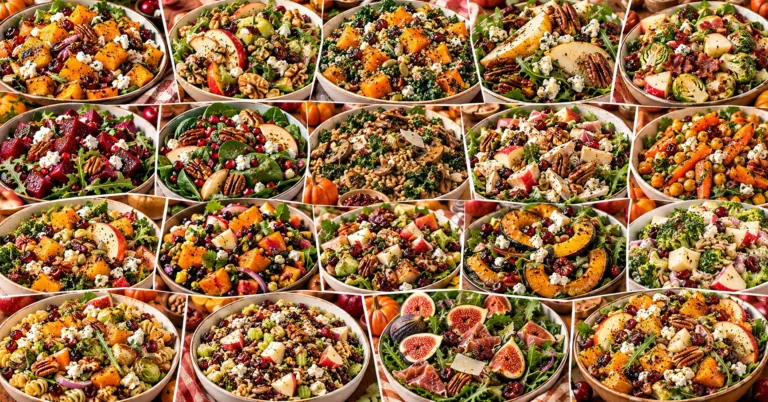
Got extra cabbage or carrots after chopping? Put them toward a crunchy salad, and check out these fresh fall salads packed with autumn flavor for inspiration.
No fresh coconut? Thawed frozen grated coconut works beautifully. Unsweetened desiccated coconut also works: use about ¼ cup and moisten it with a tablespoon of warm water first.
Missing urad dal? Skip it. You’ll lose a little crunch, but dinner will survive this plot twist.
No curry leaves? You can still make the stir fry, although the flavor will change. Don’t substitute curry powder; the two bring very different flavors. New to this ingredient? This guide to choosing and using curry leaves offers a helpful introduction before your next grocery run.
Prefer less heat? Leave out the green chili. Mustard seeds, coconut, and curry leaves still give you plenty to enjoy.
Want to skip onion? Go ahead. Add the carrots and beans directly after the tempering and continue with the recipe.
IMO, the coconut and curry leaves make this version especially satisfying, so keep both when you can.
FAQ (Frequently Asked Questions)
1. Is this the same as poriyal?
This recipe takes inspiration from Tamil-style poriyal, particularly its mustard-seed tempering and coconut finish. Cooks prepare many versions with different vegetables and seasonings, so treat this as one approachable variation.
2. Can I use frozen vegetables?
Absolutely. Choose a mix with small, similarly sized pieces and add it carefully to the pan. Start with less water because frozen vegetables release moisture as they cook.
3. Can I make it ahead?
Yes! Cook it ahead and refrigerate it promptly in a covered container. For the freshest coconut flavor, you can also cook the vegetables first and add the coconut when you reheat them.
4. Why does my stir fry look watery?
The vegetables likely released more moisture than the pan could evaporate. Cook uncovered for a few extra minutes, stirring gently, and use less added water next time.
5. Can I leave out the coconut?
You can. The dish will taste less sweet and nutty, but the tempering still brings flavor. Try a small squeeze of lemon at the end to brighten it up.
6. What should I serve with it?
Rice and dal make an easy starting point. Sambar, rasam, and chapati also work well. Need a simple lunch? Pair the stir fry with rice and a spoonful of your favorite pickle.
Final Thoughts
This South Indian vegetable stir fry gives everyday vegetables a very worthwhile upgrade. A quick tempering, sensible cooking order, and a handful of coconut do most of the work.
Keep the vegetables tender, watch those mustard seeds, and taste before serving. Now rescue that cabbage from the fridge; you finally have a delicious plan for it.

One Comment