
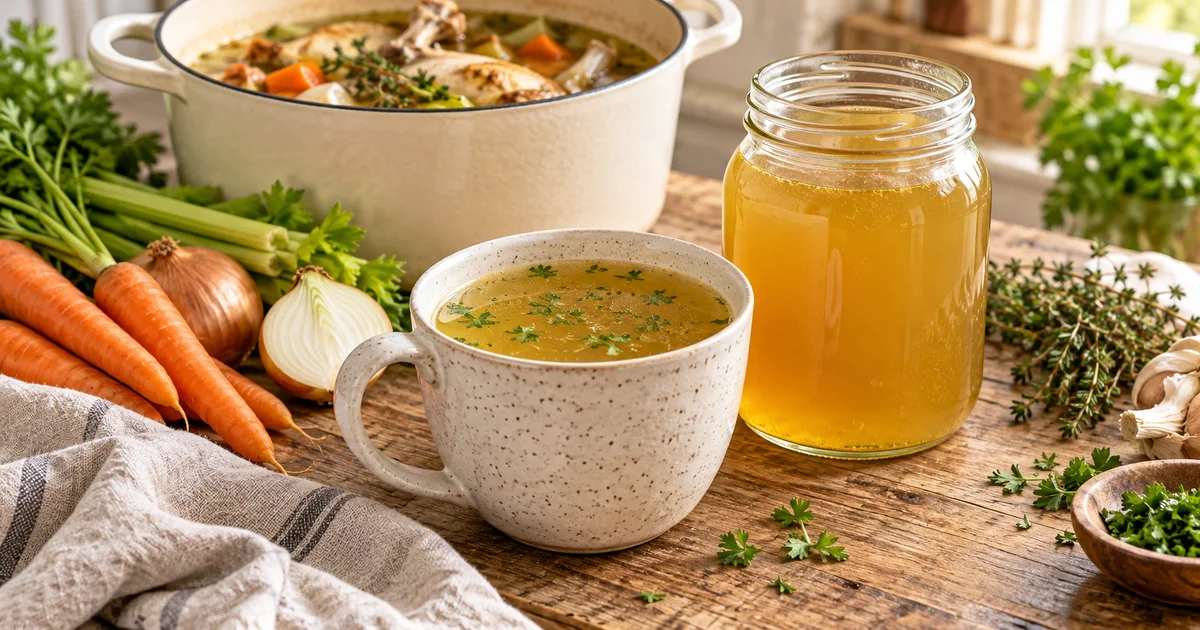
Easy Homemade Chicken Bone Broth Recipe
A roast chicken can give you more than one good dinner. Once you’ve picked off the meat, the bones still have something useful to offer: a pot of savory homemade chicken bone broth.
This recipe starts with cooked chicken bones, water, and a handful of everyday vegetables. A gentle simmer does most of the work, leaving you with broth for soups, rice, sauces, or a warm mug alongside lunch.
No complicated ingredients. No need to turn your kitchen into a wellness laboratory. Just a big pot and a little patience.
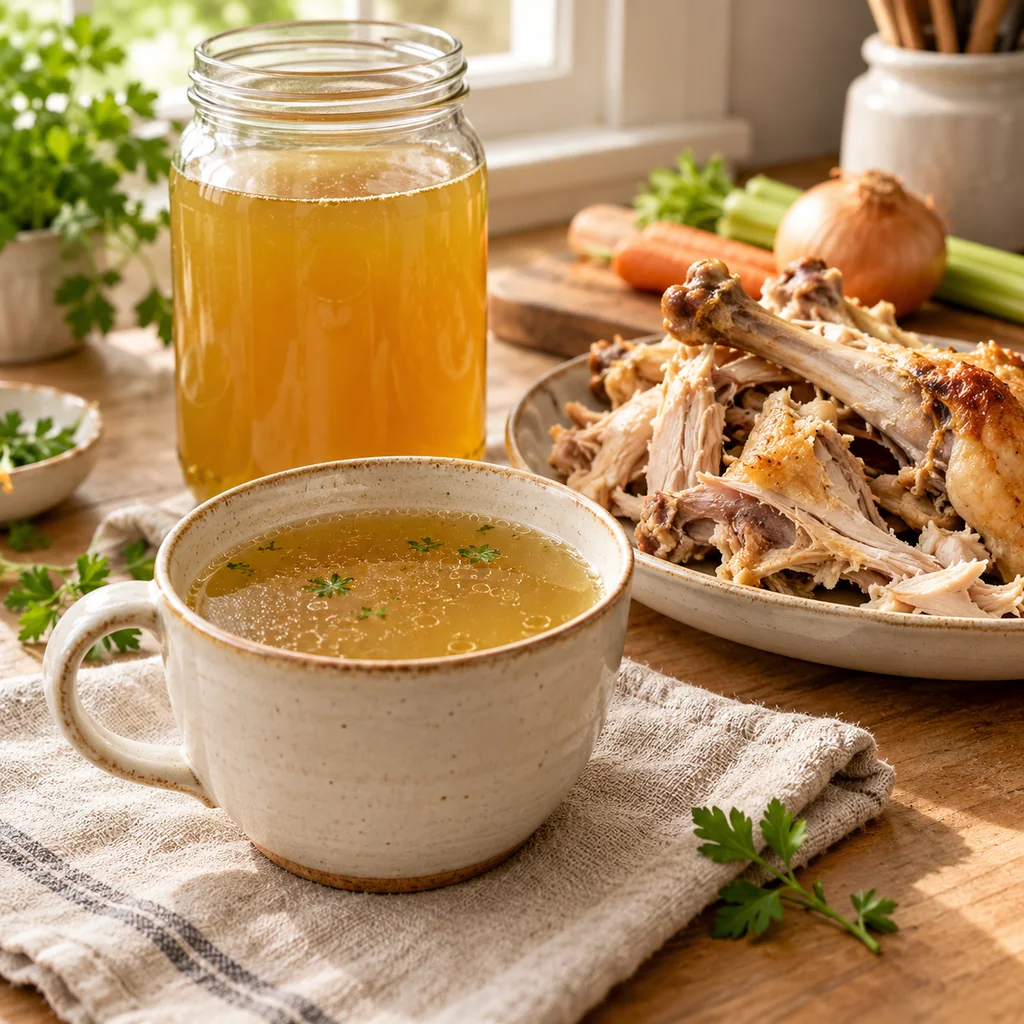
Why Make Homemade Chicken Bone Broth?
Homemade broth gives you control over the flavor and seasoning. Keep it mild for everyday cooking, add herbs for a more aromatic batch, and wait until the end to decide how much salt it needs.
It also makes good use of a safely stored chicken carcass. Freeze the finished broth in small portions, and you’ll have a useful ingredient ready for another meal.
This recipe focuses on flavor and cooking. For the nutrition discussion, read our article on bone broth benefits for women.
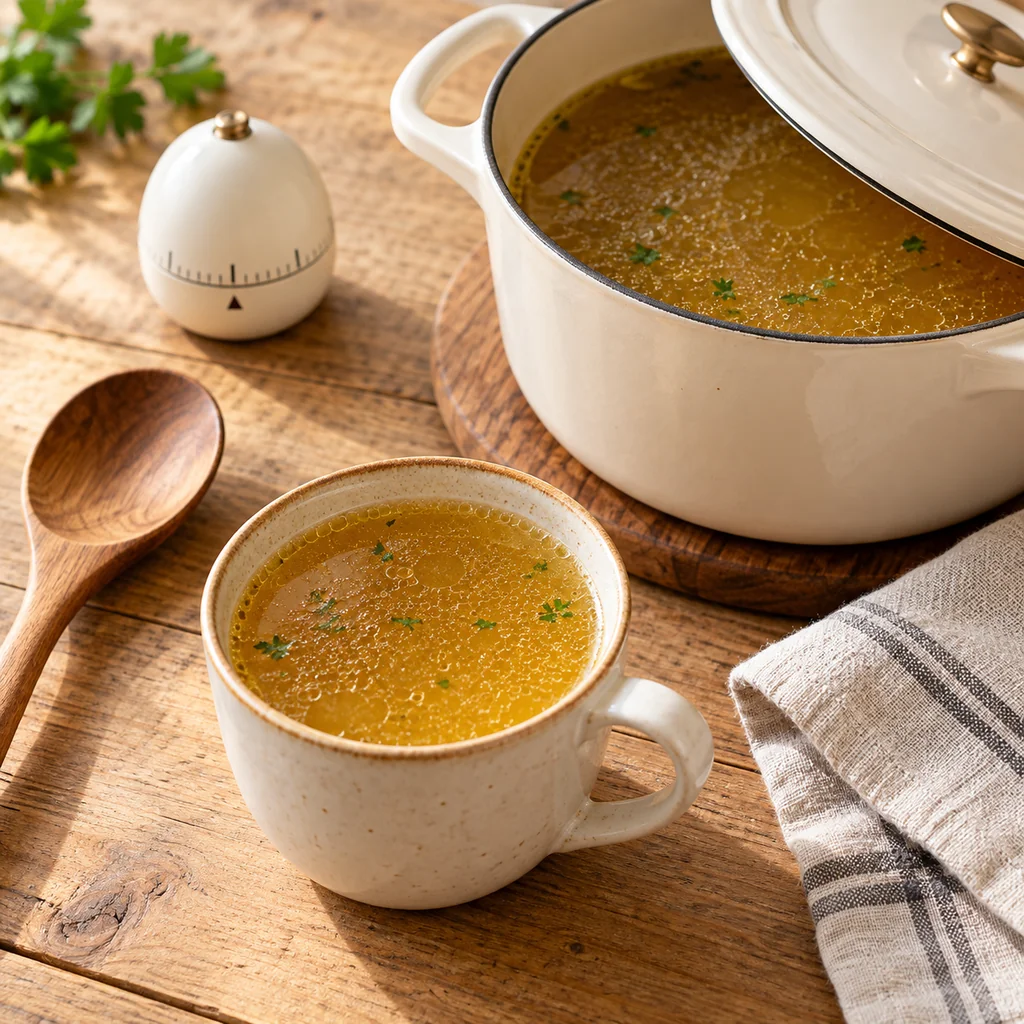
Chicken Bone Broth Recipe at a Glance
| Detail | Amount |
|---|---|
| Prep time | About 15 minutes |
| Cooking time | About 6 hours, plus time to bring to a boil |
| Yield | Approximately 6–8 cups; evaporation varies |
| Method | Stovetop |
| Main ingredient | Cooked chicken bones |
Cooling time comes after cooking. Choose a day when you can stay home and check the pot occasionally.
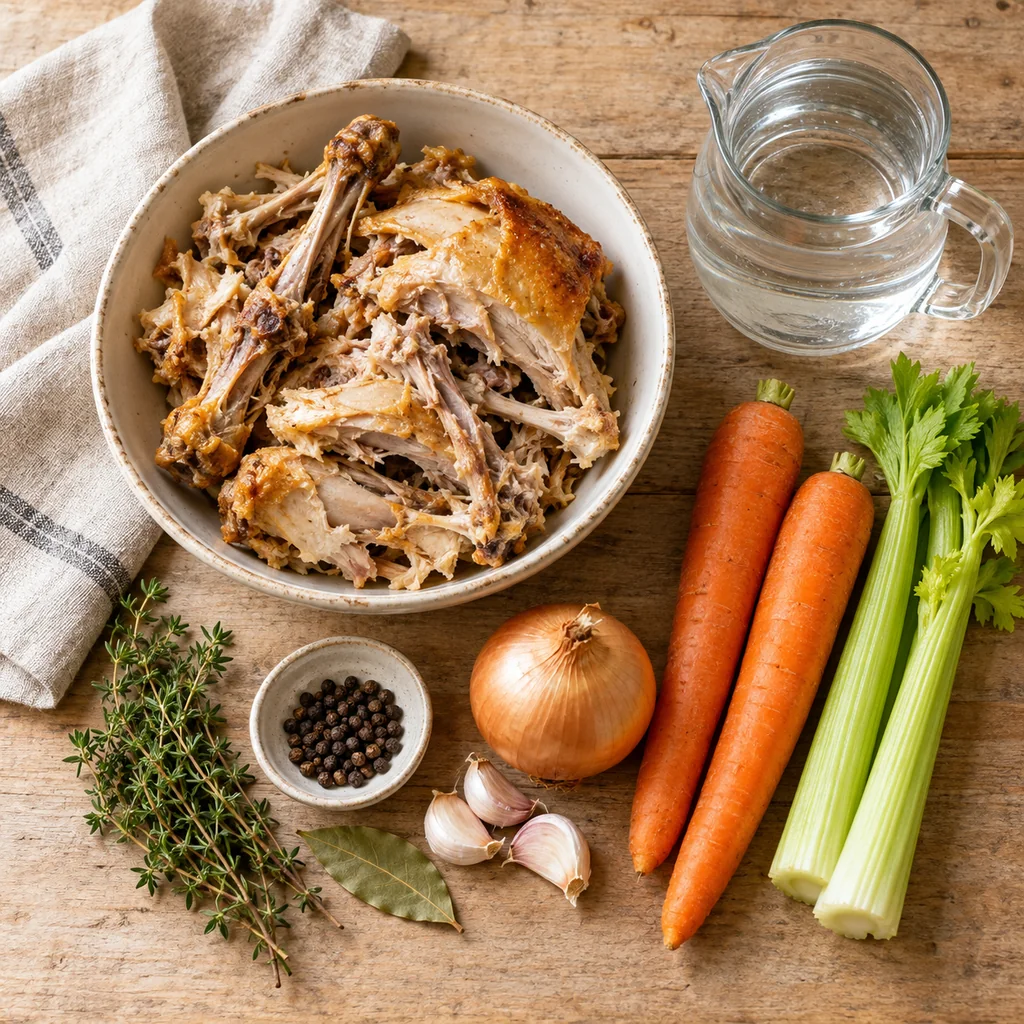
Ingredients You’ll Need
- 2 pounds / 900 g cooked chicken bones and carcass pieces: roughly the bones from two medium roast chickens, depending on their size and how much remains.
- 12 cups / 2.8 liters cold water: enough to cover the bones by about an inch in a snug-fitting stockpot.
- 1 medium onion, quartered.
- 2 medium carrots, cut into large chunks.
- 2 celery stalks, cut into large chunks.
- 2 garlic cloves, lightly crushed, optional.
- 1 bay leaf.
- ½ teaspoon whole black peppercorns.
- 2–3 fresh thyme sprigs, optional.
- Salt, to taste, after straining.
Use bones from chicken you handled and stored safely. Collecting carcasses over several meals? Freeze them promptly in a sealed container rather than keeping them in the refrigerator for a week.
Remove most of the meat first and save it separately for another meal. A little attached meat, skin, and cartilage can stay with the bones. Strong seasonings from the roast chicken will carry into the broth.
Do You Need Apple Cider Vinegar?
No. This recipe doesn’t require vinegar. You can make flavorful chicken broth without it, and skipping it keeps the flavor neutral for different meals.
Can You Use Rotisserie Chicken Bones?
Yes, if you stored them safely. Rotisserie chicken often brings plenty of salt and seasoning, so taste the finished broth before adding any more.
How to Make Chicken Bone Broth
1. Put the Bones in the Pot
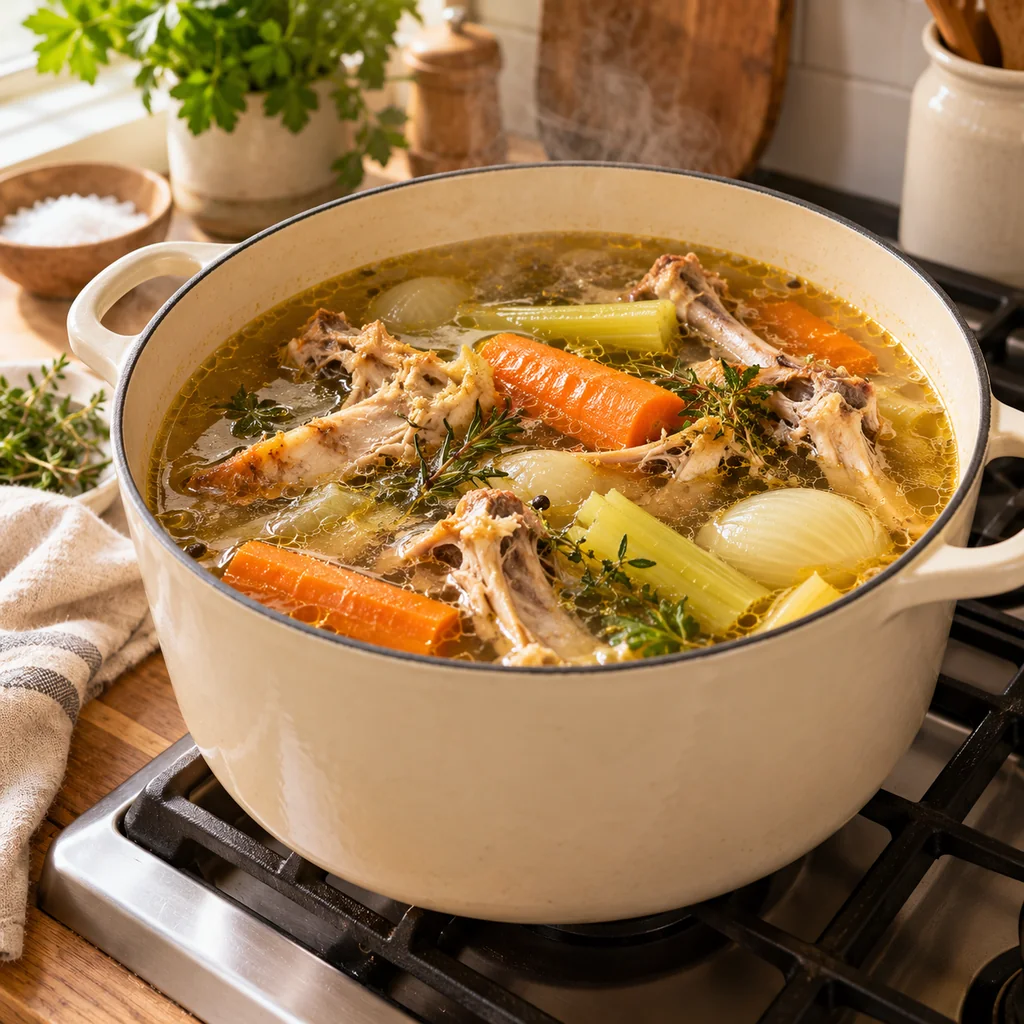
Place the cooked bones and carcass pieces in a large stockpot, about 6–8 quarts/liters. Separate the carcasses into manageable pieces if necessary; you don’t need to smash the bones.
Add the cold water. Aim to cover the bones by about an inch. A wide pot may need more water, but too much can leave you with a weak broth.
2. Bring to a Boil, Then Reduce the Heat
Bring the water to a boil over medium-high heat, then immediately reduce the heat to a gentle simmer.
Look for small bubbles that rise occasionally. A vigorous rolling boil throughout cooking can make the broth cloudier and speed up evaporation.
Skim off any foam that collects on the surface during the first 20–30 minutes. You don’t need to chase every tiny bubble.
3. Simmer the Bones Gently
Partly cover the pot and simmer gently for about 5 hours. Check it regularly and add a little hot water if the bones become exposed.
Keep the broth simmering steadily. Don’t leave the stove running while you sleep or leave the house.
4. Add the Vegetables and Herbs
Add the onion, carrots, celery, optional garlic, bay leaf, peppercorns, and optional thyme. Continue simmering for another hour.
Adding the vegetables toward the end keeps them from spending the entire cooking time falling apart in the pot.
5. Strain and Season
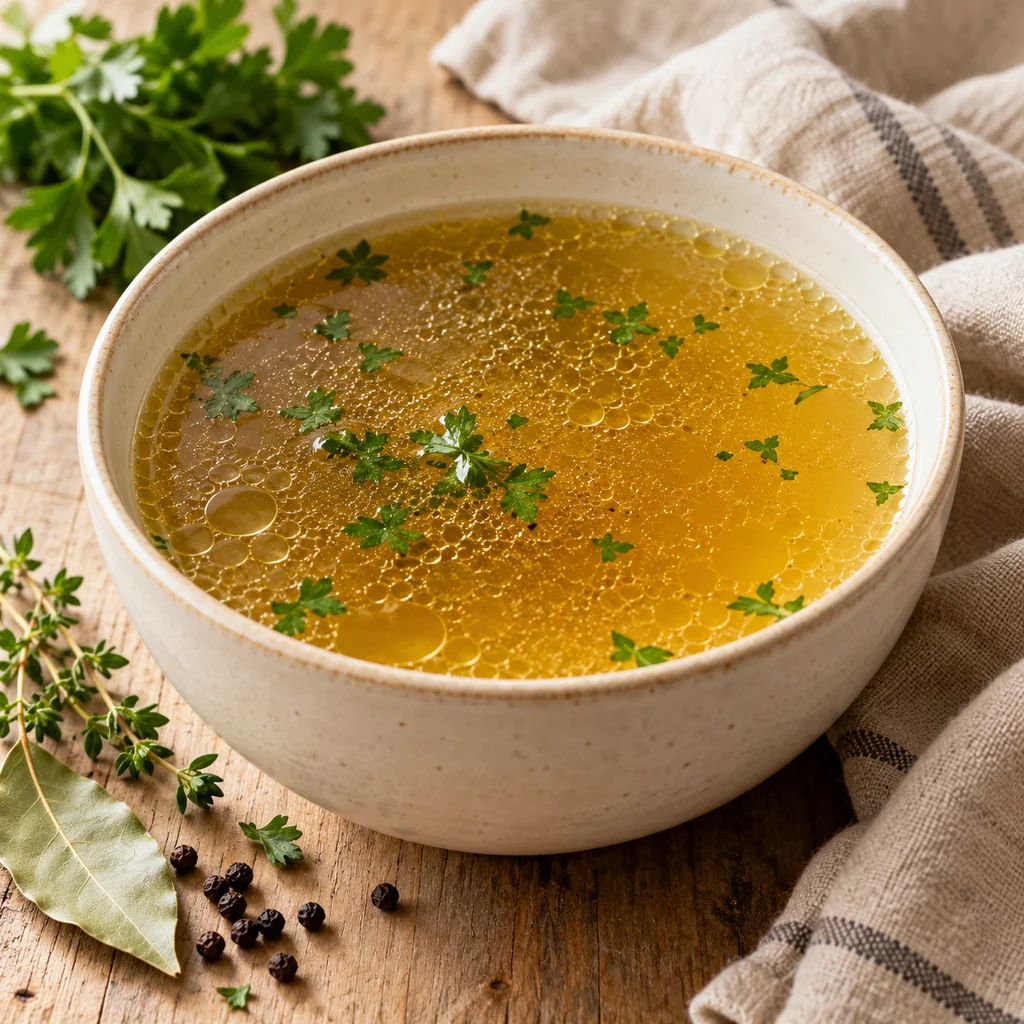
Turn off the heat. Use tongs or a slotted spoon to remove the larger pieces, then carefully strain the broth through a fine-mesh sieve into a heatproof container.
Avoid pressing hard on the solids if you want a clearer broth. Discard the spent bones and vegetables.
Taste a small sample after letting it cool enough to sip. Add salt gradually, especially if your chicken already had seasoning.
If you plan to use the broth in several recipes, leaving it unsalted gives you more control later.
6. Cool and Store Promptly
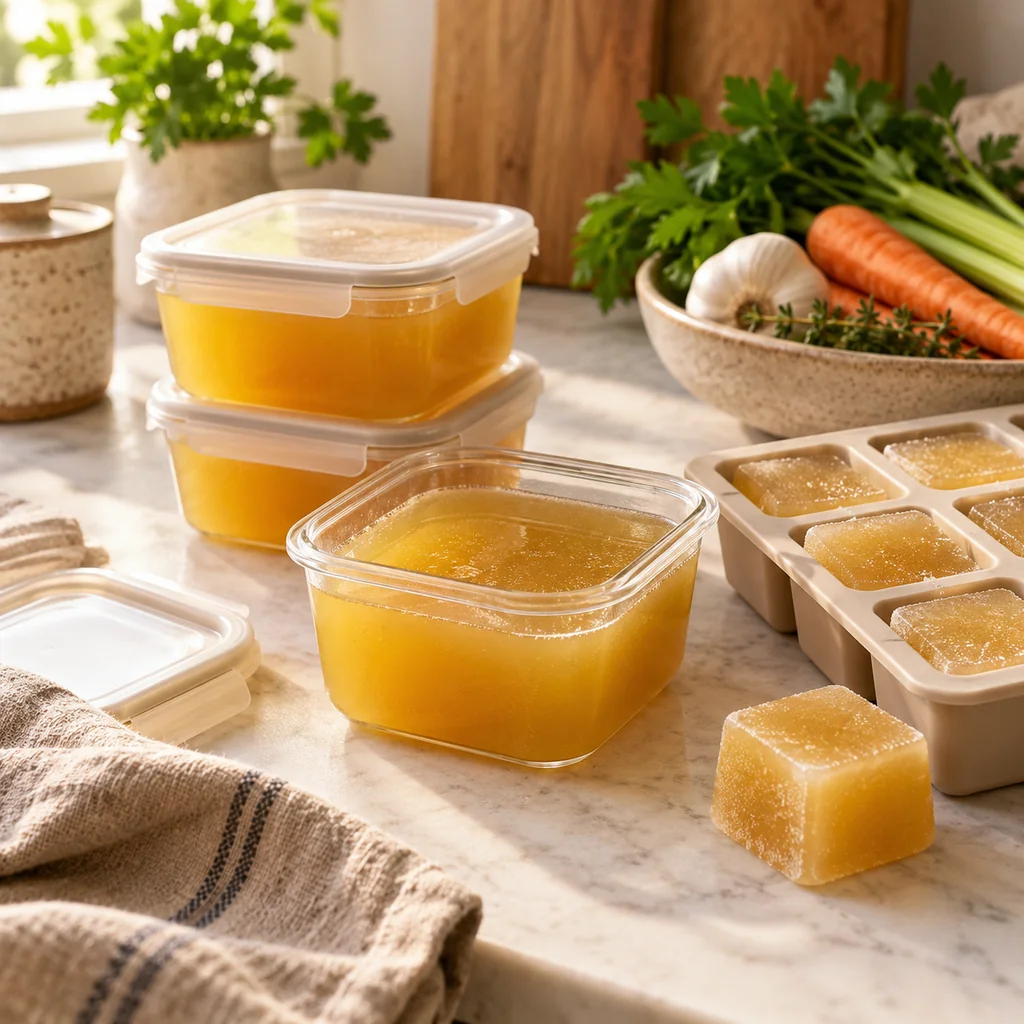
Divide the broth into small, shallow containers for quick cooling and refrigerate promptly. Don’t leave a large pot on the counter until it reaches room temperature. An ice-water bath can help cool it quickly: keep the ice water outside the container and stir the broth with a clean spoon.
Refrigerate within two hours after cooking ends, or within one hour if the room temperature exceeds 90°F / 32°C. Keep your refrigerator at 40°F / 4°C or below. Follow the USDA’s leftovers guidance for cooling and storage.
Tips for Better Flavor and Texture
Use enough bones. A small carcass in a huge pot of water will struggle to deliver much flavor. Keep the water-to-bones ratio sensible.
Choose a gentle simmer. You want steady cooking, not a pot that splashes broth across the stove.
Keep seasoning simple. Onion, carrot, celery, and a bay leaf create a versatile base. Save strong spices for the dish you make with the broth.
Salt at the end. Evaporation concentrates the seasoning. An early handful of salt can become tomorrow’s very salty soup.
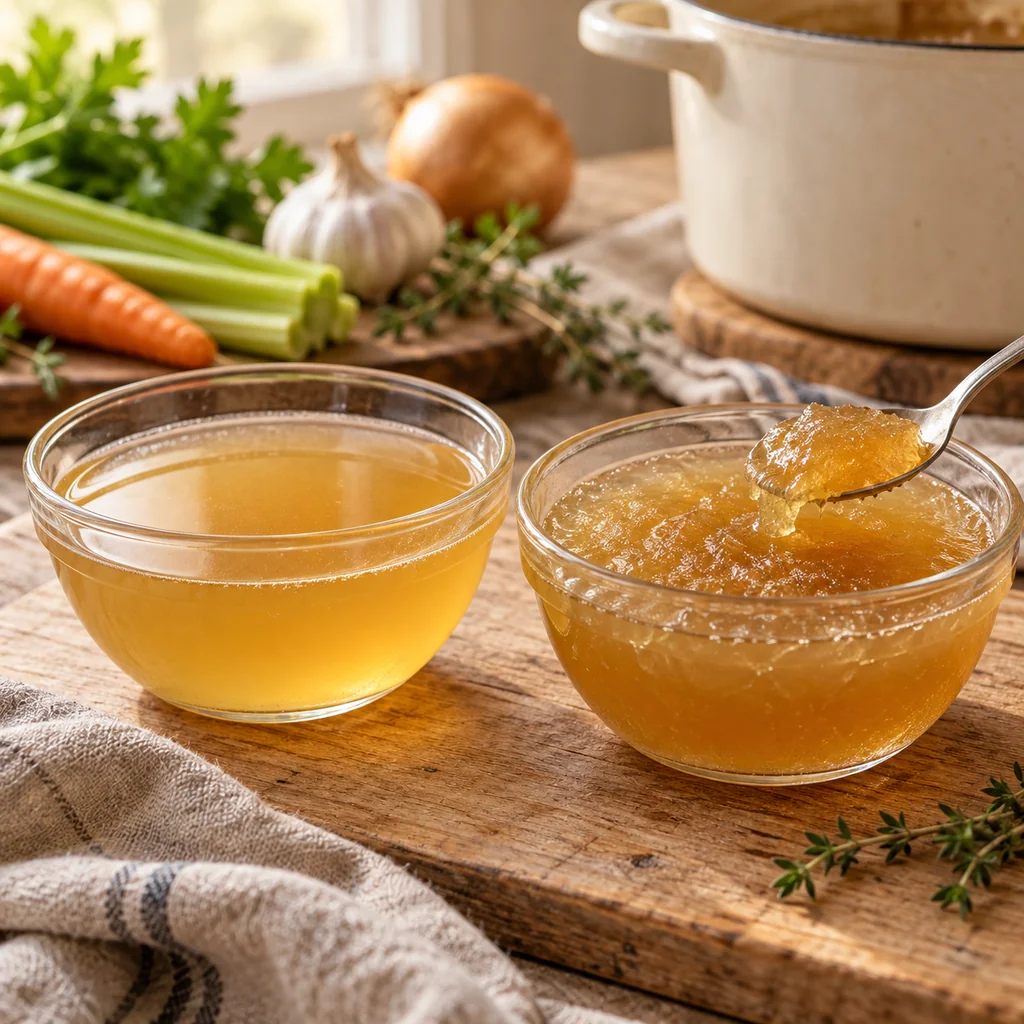
Use chilled texture as a cooking clue. Some batches gel in the refrigerator, while others stay liquid. Neither texture measures health benefits or food safety.
How to Store, Freeze and Reheat Chicken Bone Broth?
Refrigerator: Use properly cooled broth within 3–4 days.
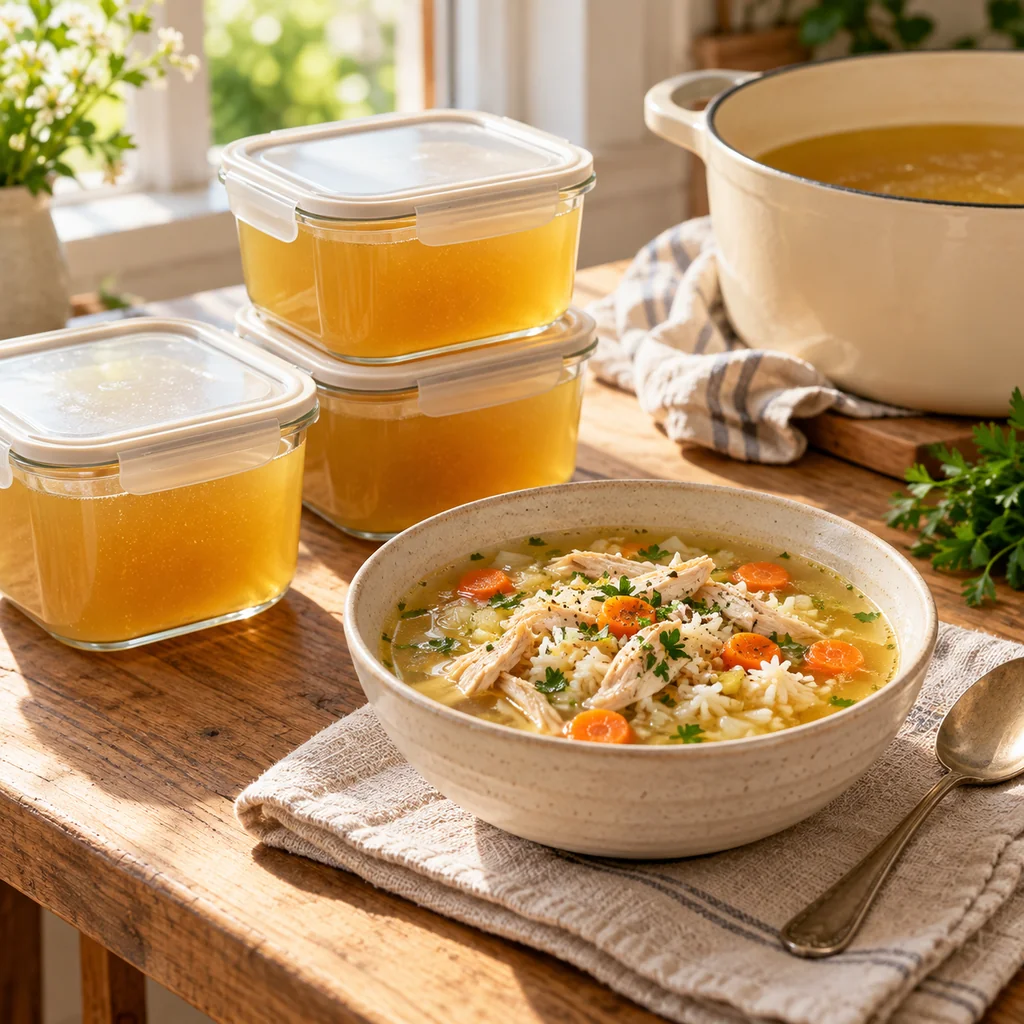
Freezer: Freeze portions promptly and aim to use them within 3–4 months for best quality. Label each container with the date. Leave expansion space and use freezer-safe containers; check the manufacturer’s directions before freezing broth in glass.
Thawing: Thaw in the refrigerator, or reheat a frozen portion directly in a saucepan with a little water and frequent stirring. Don’t thaw broth on the counter.
Reheating: Bring broth to a rolling boil. USDA recommends reheating leftovers to at least 165°F / 74°C.
These storage and reheating recommendations follow USDA guidance.
Easy Ways to Use Chicken Bone Broth
Once you have a batch, start with these simple uses:
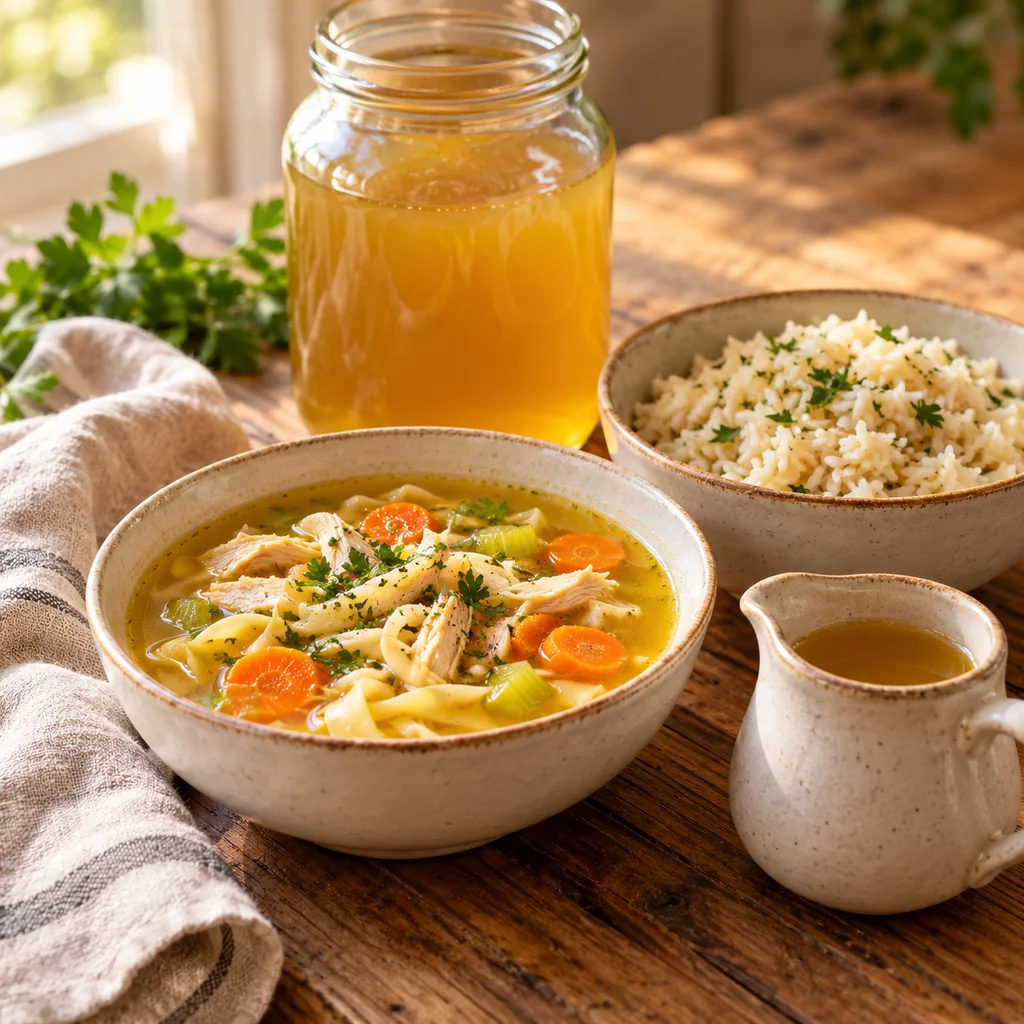
- Soup: Add vegetables, cooked chicken, and noodles or rice.
- Rice: Replace some or all of the cooking water with broth, following your rice recipe’s liquid ratio.
- Sauces and gravy: Use broth as the savory liquid base.
- Stews: Add it wherever the recipe calls for chicken stock.
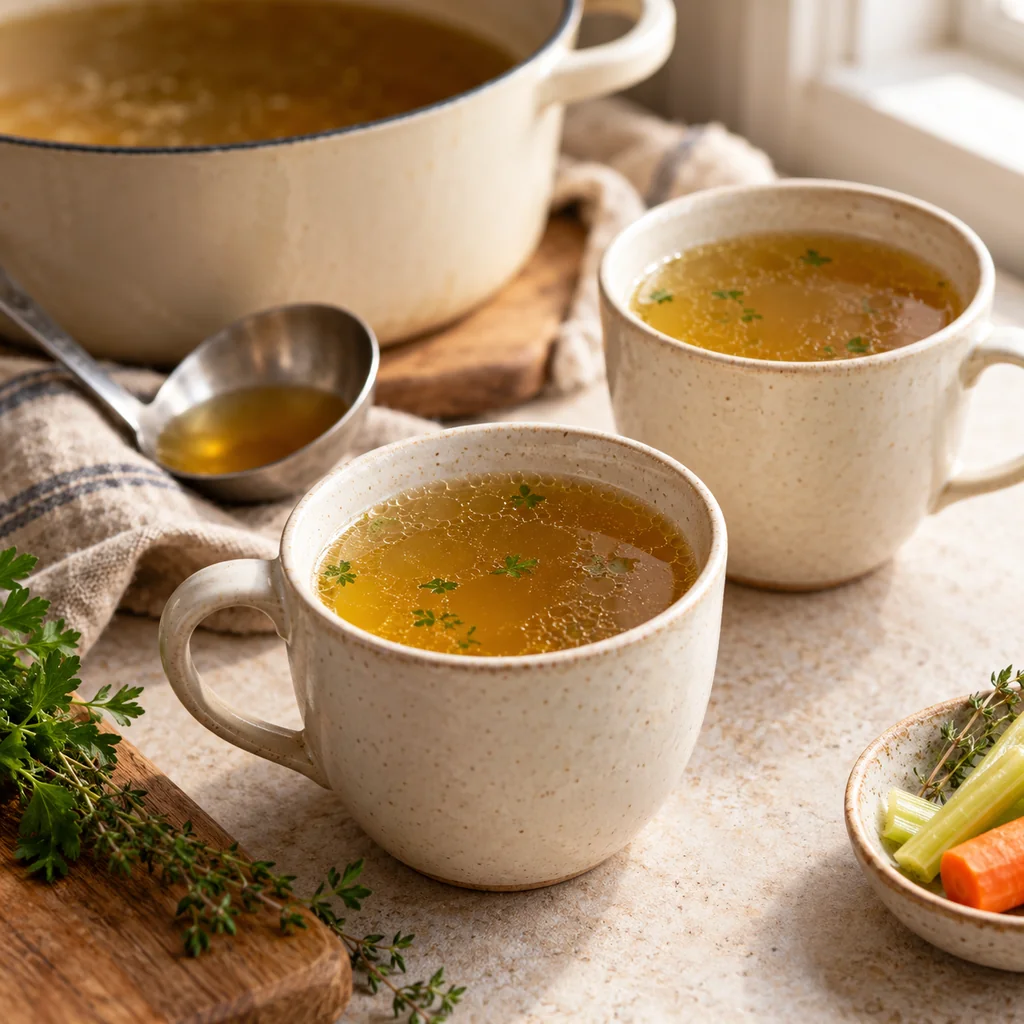
- A warm drink: Heat a small portion and season to taste, then serve it alongside food.
For dinner inspiration, explore our cozy fall chicken recipes or easy fall dinner ideas. Check each recipe before swapping liquids, especially if your broth already contains salt.
Troubleshooting Your Homemade Broth
Why Didn’t My Broth Gel?
Gel formation depends on the bones and connective tissue, the amount of water, and how concentrated the broth becomes. A batch with lots of water may remain liquid when chilled.
If it tastes good, use it. If it tastes weak, gently reduce it after straining, then cool and store it promptly.
Why Does It Taste Watery?
You may have used too much water for the amount of bones. Simmer the strained broth uncovered to reduce it, tasting occasionally. Add salt only after the flavor reaches the strength you want.
Why Is It Cloudy?
A hard boil, lots of stirring, or pressing on the solids can cloud the broth. Cloudiness alone doesn’t tell you whether it’s safe. Judge safety by how you handled, cooked, and stored it.
Why Is There a Fat Layer on Top?
Fat can rise to the surface and firm up when the broth chills. Lift it off if you prefer a lighter broth. A fat cap doesn’t extend the refrigerator storage window.
Frequently Asked Questions
Is Chicken Bone Broth Different From Chicken Stock?
The terms overlap. Both can use chicken bones and connective tissue; people often use “bone broth” for a longer-simmered version. The name alone doesn’t guarantee a particular flavor, texture, or nutrient content.
Do I Have to Cook It for 24 Hours?
No. This recipe uses about six hours of gentle simmering. You don’t need an overnight stovetop session to make a useful batch of chicken broth.
Can I Use Raw Chicken Bones Instead?
Raw bones work in broth, but this recipe specifically starts with cooked carcasses. Follow a recipe designed for raw bones if you want roasting instructions and a different preparation method.
Should I Add a Nutrition Label?
Don’t assign precise protein or calorie values without a dependable analysis. Homemade broth varies with the bones, attached meat, fat removal, water, and final yield.
Printable Chicken Bone Broth Recipe
Yield: Approximately 6–8 cups
Prep: 15 minutes
Cook: About 6 hours, plus heating time
Equipment: Large stockpot, fine-mesh sieve, heatproof containers
Ingredients
- 2 pounds / 900 g cooked chicken bones and carcass pieces
- 12 cups / 2.8 liters cold water, adjusted to cover bones by about an inch
- 1 medium onion, quartered
- 2 medium carrots, roughly chopped
- 2 celery stalks, roughly chopped
- 2 garlic cloves, lightly crushed, optional
- 1 bay leaf
- ½ teaspoon whole black peppercorns
- 2–3 thyme sprigs, optional
- Salt to taste, added at the end
Instructions
- Add the bones and water to a large stockpot.
- Bring to a boil, then reduce to a gentle simmer. Skim surface foam during the first 20–30 minutes.
- Partly cover and simmer for about 5 hours. Check regularly and add hot water as needed to keep the bones covered.
- Add the vegetables, herbs, and peppercorns. Simmer for another hour.
- Remove large solids, then strain through a fine-mesh sieve. Taste and season gradually.
- Divide into small, shallow containers and refrigerate promptly, within two hours of finishing cooking; within one hour above 90°F / 32°C. Use within 3–4 days or freeze promptly for longer storage.
A Little Work, Plenty of Uses
Chicken bone broth turns leftover bones into something you can use all week—or freeze for another month. Keep the simmer gentle, the seasoning flexible, and the portions small enough to cool quickly.
Then let your next soup, sauce, or rice dish put that batch to work.