
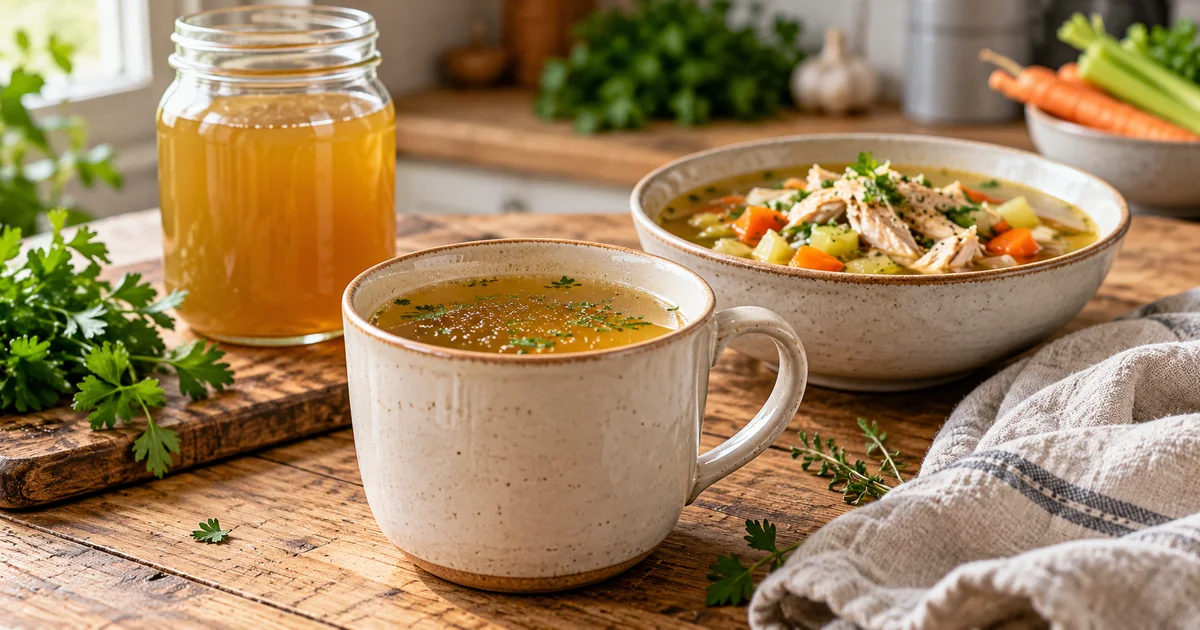
Bone Broth Benefits for Women: What It Can Actually Do
A warm mug of bone broth sounds pretty lovely. But scroll through enough wellness posts, and that humble mug starts collecting some ambitious job titles: skin treatment, gut healer, hormone helper, and weight-loss secret.
That’s a lot of responsibility for soup.
If you’ve searched for bone broth benefits for women, you probably want a straightforward answer: does it deserve a place in your kitchen?
Bone broth can add fluid, some protein, and savory flavor to your meals. Research has not established that drinking it produces special benefits for women or reliably improves skin, digestion, hormones, or weight. Its most useful role starts in the kitchen: a comforting drink or a flavorful base for a satisfying meal.
Let’s look at the practical benefits, unpack the popular claims, and see where bone broth fits into a balanced diet.
What Is Bone Broth?
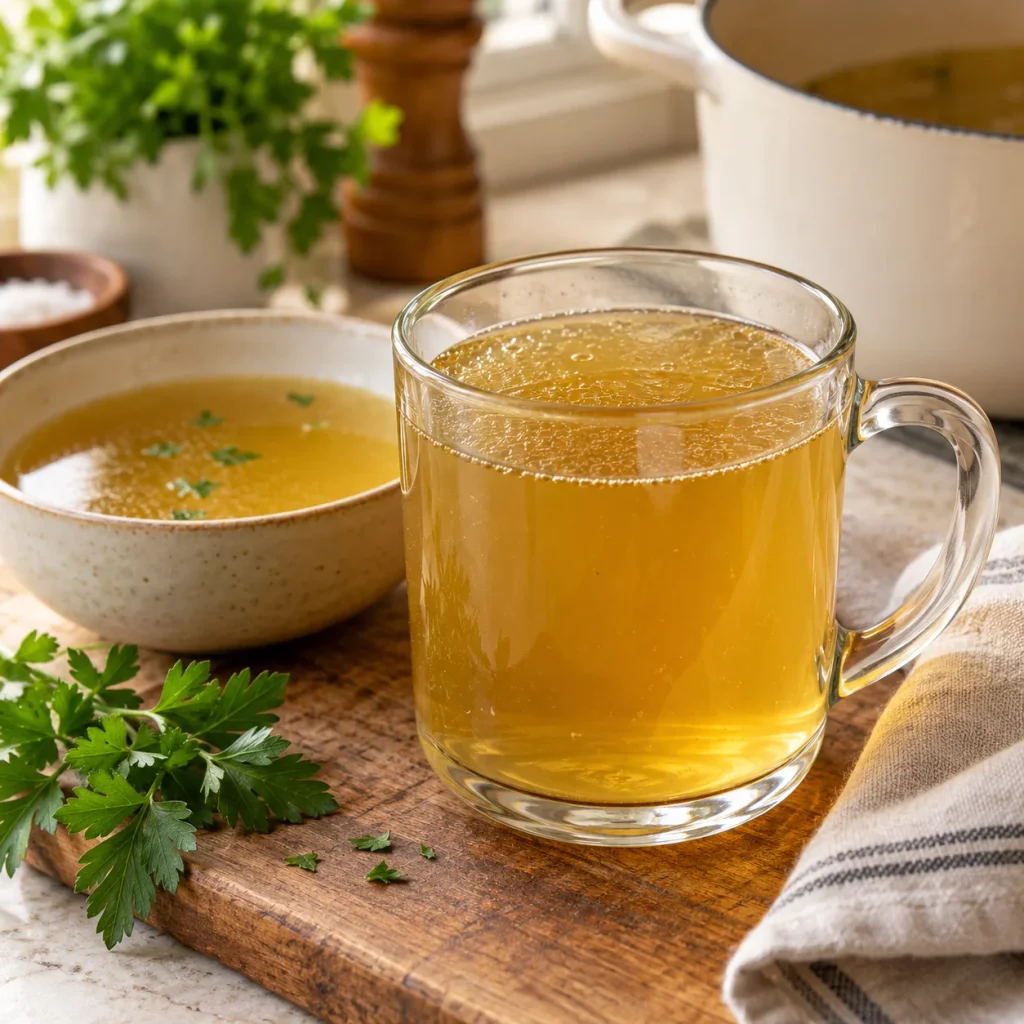
You make bone broth by simmering animal bones and connective tissue in water, often with vegetables, herbs, and seasonings. Chicken and beef are common choices.
The cooking process extracts flavor and turns some collagen in connective tissue into gelatin. That gelatin can give chilled broth a soft, jiggly texture.
Bone broth overlaps with traditional stock. Recipes and commercial labels vary, so the words “bone broth” alone don’t tell you how much protein or other nutrients a cup contains.
A broth that gels may work beautifully in your cooking, but the wobble doesn’t measure its health benefits.
Bone Broth Benefits for Women: The Practical Answer
1. It Can Add Some Protein
Depending on the bones, water, cooking time, and concentration, bone broth can contribute protein. The amount varies enough that you shouldn’t assign every homemade cup the same nutrition numbers.
If you buy broth, check the serving size and protein on the label. If you make it, treat it as an addition to your meals rather than your main protein source.
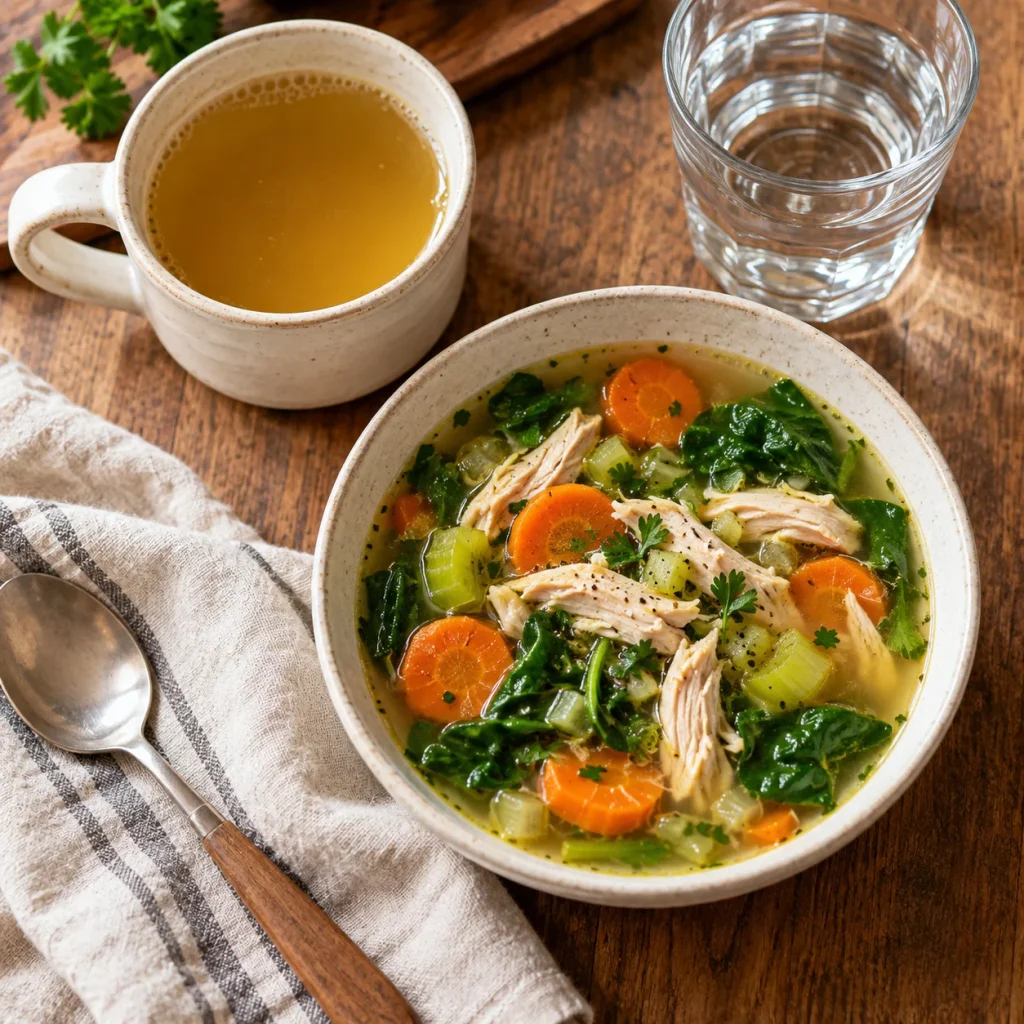
For a more substantial lunch, add shredded chicken, tofu, or beans to a broth-based soup. A mug of broth alone doesn’t offer the variety of nutrients that a complete meal provides.
2. It Contributes Fluid
Bone broth contains plenty of water, so drinking it contributes to your fluid intake.
Some people simply prefer a warm, savory drink to another glass of plain water. That preference can make broth a pleasant addition to an ordinary day. You don’t need a special morning ritual to enjoy it. Have a small mug with lunch, serve it alongside dinner, or use it in soup.
3. It Makes Nutritious Meals More Appealing
This might sound less exciting than a beauty promise, but flavor matters. A good broth can make vegetables, lentils, rice, and leftovers easier to turn into a meal you actually want to eat. Add carrots, greens, chicken, and noodles, and you have something much more satisfying than a plain cup of liquid.
The extra ingredients contribute their own nutrients. Give the vegetables and beans some credit, too. Pair your broth with one of these fresh fall salads for a meal with more vegetables and variety.
4. It Can Help You Use Kitchen Leftovers
A safely stored roast-chicken carcass can become a useful cooking ingredient instead of heading straight for the bin.
Pair it with onion, carrot, celery, and herbs, then freeze the finished broth in meal-sized portions. You’ll have a head start on soups, sauces, and weeknight dinners.
This benefit applies to anyone who cooks. Bone broth doesn’t need to offer a women-specific biological effect to earn some freezer space.

Does Bone Broth Help Skin, Hair and Nails?
Bone broth contains collagen-derived gelatin, which explains much of the interest in beauty benefits.
However, digestion breaks dietary proteins into smaller components. Your body doesn’t send the collagen from a mug directly to your face.
Harvard’s Nutrition Source explains that the body needs a range of nutrients to make collagen, including amino acids, vitamin C, and zinc. A varied diet supplies those building materials. Read Harvard’s collagen guide.
Another important distinction: studies involving measured doses of collagen supplements don’t establish that homemade bone broth produces the same results. Researchers examining broth found inconsistent concentrations of collagen-related amino acids compared with supplement doses used in research. See the bone broth study.
Enjoy broth if you like it, but don’t promise yourself thicker hair, stronger nails, or fewer wrinkles from a daily cup.
What About Gut Health?
You’ll often see claims that bone broth “heals the gut.”
That wording goes beyond the available evidence. Research into individual components, or experiments involving animals, cannot establish that drinking broth treats digestive problems in people. For example, one frequently discussed study examined bone broth in a mouse model of ulcerative colitis, not a trial demonstrating a treatment for women. Read the study.
A warm drink may feel comforting, and you may tolerate a simple broth well. Comfort and tolerance still differ from treating a digestive condition.
If broth gives you discomfort, skip it. Persistent pain, diarrhea, or other digestive symptoms deserve proper attention rather than another cup of a trending food.
Is Bone Broth Good for Women’s Bones?
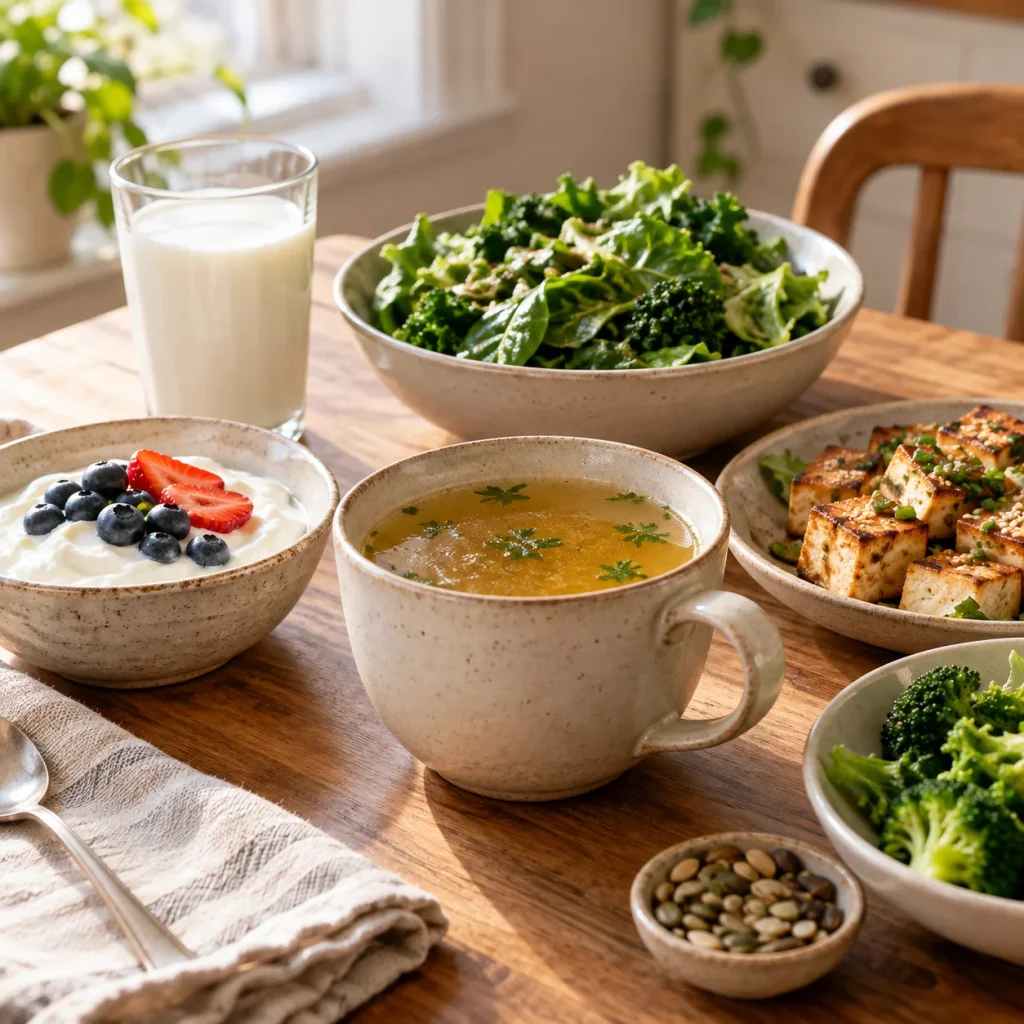
The name makes this sound like an obvious connection. Unfortunately, drinking something made with bones doesn’t guarantee a meaningful calcium intake.
Harvard notes that bone broth generally contains small amounts of minerals and that its composition varies. Don’t count on it as your main calcium source.
Women’s calcium needs do change with age. The National Institutes of Health lists 1,000 mg daily for adults ages 19–50 and 1,200 mg for women ages 51–70. Adults over 70 also need 1,200 mg. Calcium-rich options include dairy foods, fortified alternatives, and canned fish with edible bones. Read the NIH calcium fact sheet.
Broth can sit alongside those foods in your meals. It doesn’t replace them.
Can Bone Broth Balance Hormones or Help With Weight Loss?
Research has not established bone broth as a treatment for hormonal problems or a reliable way to lose weight.
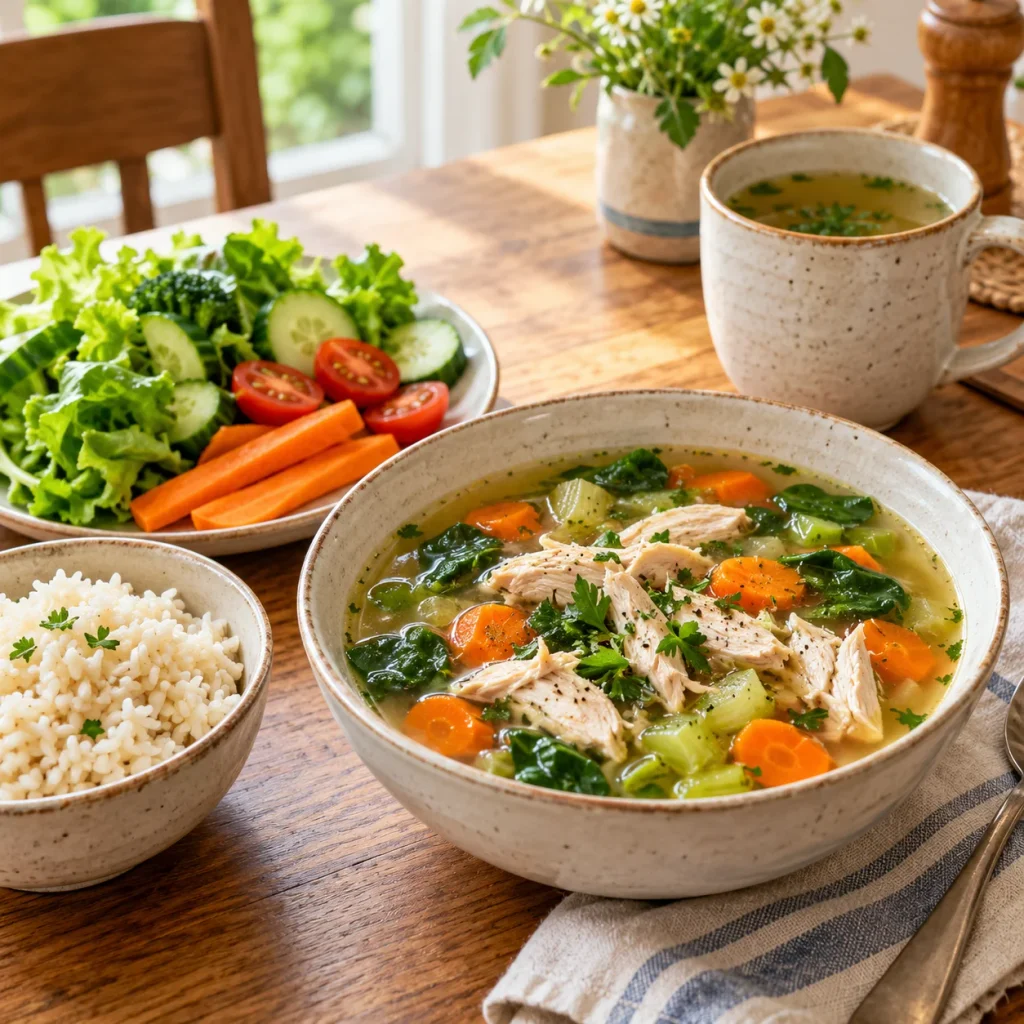
A plain broth also lacks the fiber and food variety of a full meal. Repeatedly swapping meals for mugs of broth can make it harder to eat enough. For a more filling meal, serve your broth alongside one of these easy fall chicken dinners.
If you want an easy dinner, build on the broth: add a protein food, vegetables, and rice, potatoes, or noodles. That approach gives the mug something useful to do without turning dinner into a restriction plan.

Frequently Asked Questions
Should women drink bone broth every day?
You can enjoy it regularly, but no established women-specific daily dose exists. Let your preferences, overall meals, and any dietary limits guide you.
Is chicken or beef bone broth better?
Neither automatically offers greater benefits for women. Choose the flavor you prefer, then compare nutrition labels if you buy it. Homemade batches vary.
What is the best time to drink bone broth?
Choose a time that fits your day. Research has not established a special benefit from drinking it first thing in the morning or on an empty stomach.
Can I replace breakfast with bone broth?
A mug alone usually makes a limited breakfast. Pair it with other food, or turn it into a soup with protein, vegetables, and a starch.
Can vegetarians make bone broth?
Bone broth requires animal bones. Vegetarians can make vegetable broth and add beans, lentils, or tofu to create a more substantial meal.
How quickly will I notice benefits?
There’s no established timeline for skin, gut, hair, or hormonal changes from bone broth. The immediate benefits you can count on are a warm drink and a useful cooking ingredient.
Is Bone Broth Worth Adding to Your Diet?
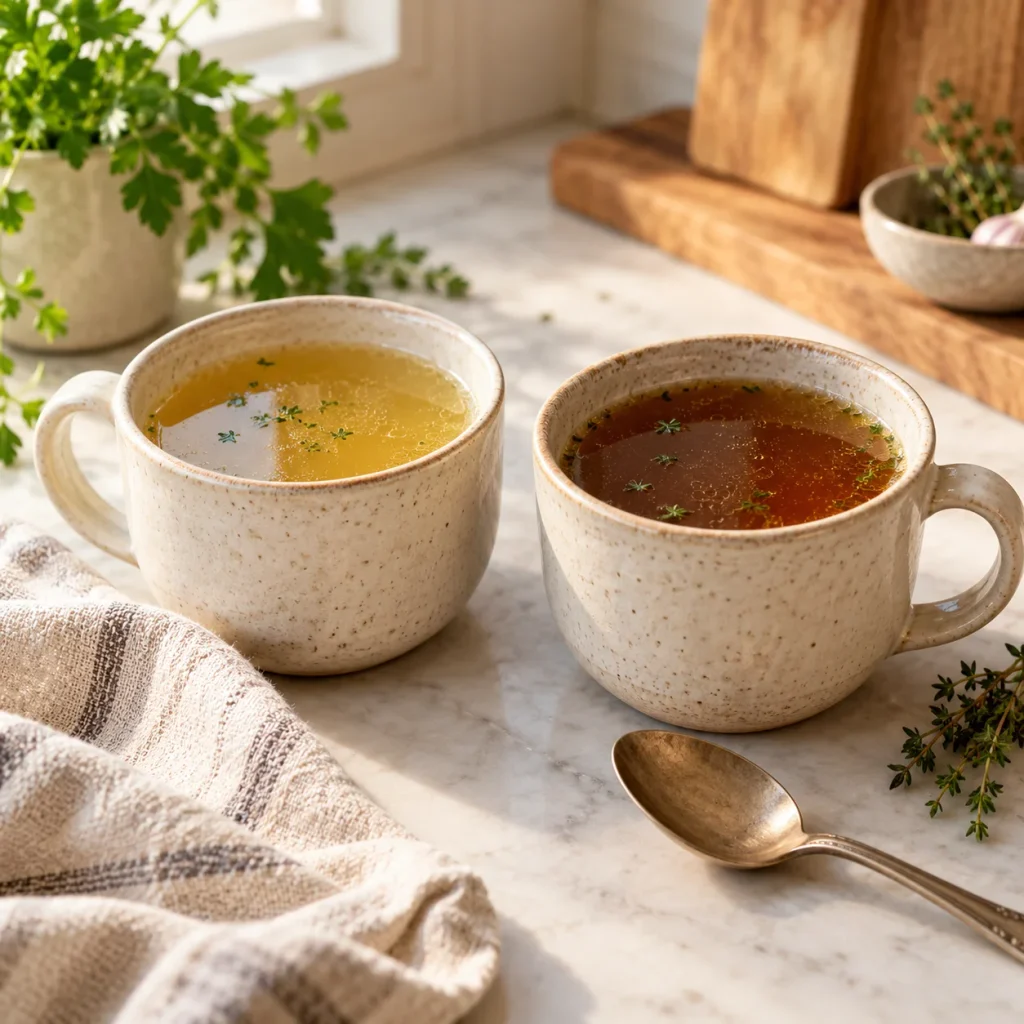
Bone broth can bring comfort, flavor, and convenience to your kitchen. Those qualities make it useful without a long list of beauty promises. Looking for something to serve alongside your mug? Explore these easy fall dinner ideas.
If you enjoy it, bone broth can fit into meals you look forward to eating. Its practical value comes from fluid, some protein, and flavor—not a guaranteed change in your skin, hormones, or digestion.